ANTARCTIC OZONE
This page gives information about ozone at Halley, Rothera and Vernadsky/Faraday stations. It was either updated or new data was added on 2026 October 19. The next update is likely to be on or about October 26.
Background / Ozone Bulletins / Ozone data / Public information / Public information for schools /
Antarctic Situation at 2026 October 19
Antarctic ozone today:
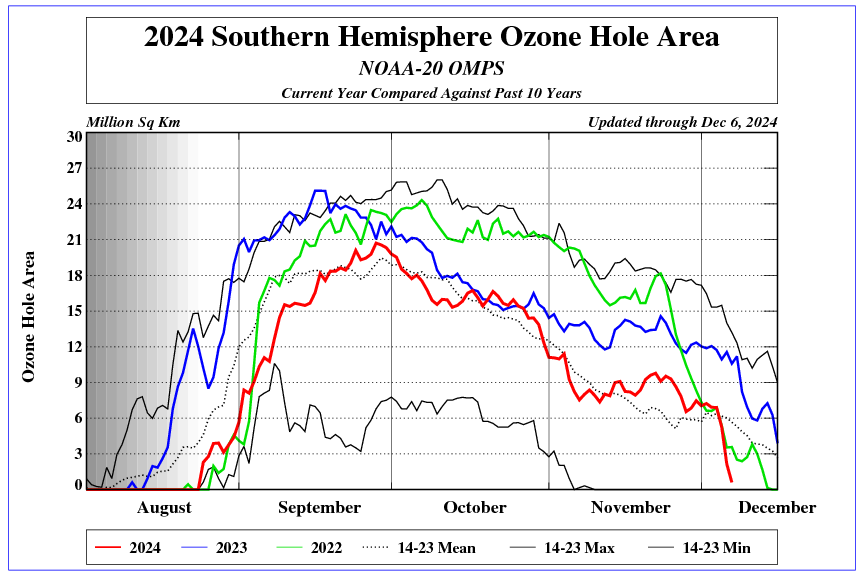
The 2026 polar vortex began to form in late April and had grown to 35 msqkm (million square kilometres) by late September. Vortex stability declined in
the second half of September, but only to average levels. The vortex now covers around 34 msqkm, larger than average for the time of year. The area
with potential PSCs began to grow from early May and reached a peak of 31 msqkm by mid August, which is unusualy large. It had shrunk to 13 msqkm
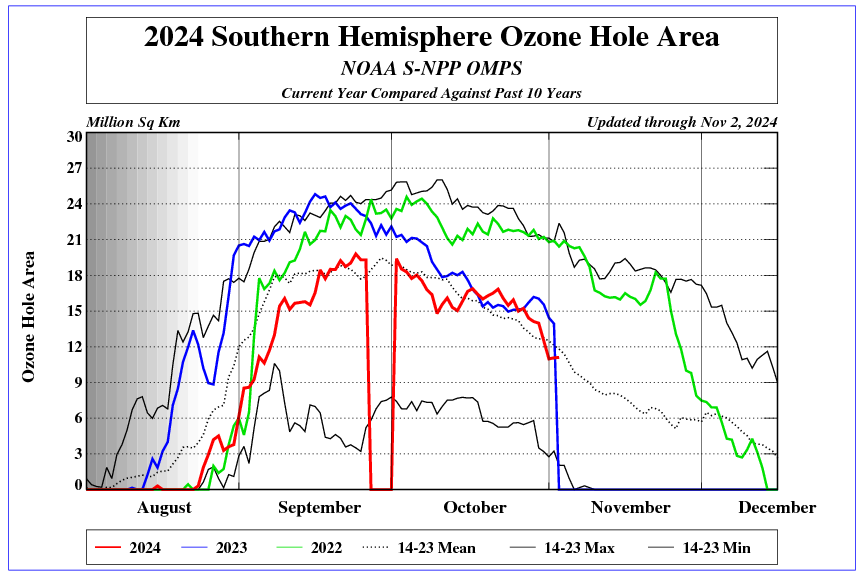
by mid October, much larger than average. The ozone hole began to grow from mid August and peaked at 25 msqkm in mid September. It still covers 24 msqkm, larger
than over the last decade at this time of year.
Ozone values are lowest over the pole within the polar vortex, and are
building outside the polar vortex. They currently range from a low of around
130 Dobson Units (DU) over the pole to a high of around 420 DU outside the polar vortex.
Temperatures in parts of the Antarctic
stratosphere are still below the PSC formation
temperature, but rising from the seasonal minimum.
The temperature of the ozone layer is warmest just outside the polar
vortex and declines towards the pole and towards the equator.
Our thoughts and prayers remain with our Ukrainian colleagues in Kyiv and at Vernadsky, who continue with their scientific work despite the invasion of their country.
September 16 is World Ozone Day.
See the final situation report for last year for information on the 2025 - 2026 season.
Notes: An ozone hole is defined as an area with values below 220 Dobson Units (DU). On average a column of air will hold 300 DU of ozone, equivalent to 3mm of ozone at sea-level pressure. Most of the ozone is between 10 and 40 km with a peak at around 20 km. The Antarctic ozone hole is usually largest in early September and deepest in late September to early October. Prior to the formation of ozone holes, Antarctic ozone values were normally at their lowest in the autumn (ie March). On occasion atmospheric vertical motions create small areas with ozone substantially below the long term average. Different satellites give different views of the exact ozone distribution. The continent covers 14 million sq. km. There are marked differences between the various satellite ozone measurements and analyses. The KNMI analysis and TEMIS forecasts are close to the observed values, whereas the Canadian analysis seems largely based on SMOBA data and is clearly at variance with ground based observations.
UNEP assessements: September 16 is world ozone day, and in 2009 the final UN Member State to ratify the Montreal Protocol signed up. All 197 Member States have now ratified the protocol up to and including the Beijing amendments. 2007 was the International Year of the Ozone Layer. A summary of the WMO/UN 2014 Ozone Assessment, the Assessment for Decision-Makers was released on 2014 September 10. 2017 was the 30th Anniversary of the Montreal Protocol. UNEP released the 2022 Scientific Assessment of Ozone Layer Depletion in 2023 January. An emerging threat to the ozone layer is through aluminium pollution caused by the re-entry of satellites; these effects were not assessed in the 2022 report.
News: Observations reported in Nature in May 2018 showed that the rate of decline of CFC-11, an ozone depleting substances in the atmosphere, which is also a greenhouse gas, had become slower than predicted. This suggested that either something unusual was taking place in the atmosphere or that there were additional man-made emissions. The paper suggested that the most likely reason was illegal manufacture and release from somewhere in eastern Asia. Investigation by the EIA found that production of polyurethene foam in China could explain the observed changes. They encouraged the Chinese government to take immediate action. This became news again in May 2019 when another paper was published in Nature. The Chinese government took action and by 2021 the rate of decline had returned to that expected.

 Observations
from Halley since 1994 (the year when ozone depleting gasses were at their peak
according to one estimate) show a slow increase of about 1 DU per year in the
minimum ozone amount recorded each October. However, the inter-annual variation
is such that this trend is not quite significant at the 99% level, ie the data
is also just consistent with no change in the minimum amount. Although the
amount of ozone destroying substances in the atmosphere is going down, the
inter-annual variation in the size and depth of the ozone hole is largely
controlled by the meteorological conditions in the stratosphere. The
provisional Halley 2015 October minimum value was lower than that of 2014, 2013
and 2012 and this was due to the prevailing meteorological conditions. It
was also influenced by the eruption from Calbuco in southern Chile. Models suggest that recovery
may be more rapid after 2010. The 2019 October ozone minimum at Halley was
the highest since the split ozone hole of 2002 and the overall springtime
minimum the highest since 1982. The springtime (ie September and October)
minimum ozone values at Halley are slightly better fitted by a quadratic than a
linear fit. It is still too soon to say that we have
had the worst ever ozone hole, particularly as there has been no major volcanic
eruption in the Southern Hemisphere since 1992. There has also been little
cooling of the lower stratosphere since the mid 1990s. A simple linear extrapolation of the trend in
minimum values gives the final year with ozone hole levels as 2070, whilst the
quadratic fit suggests 2035, though the error bars on this estimate are very
large. Satellite data, which shows good agreement with the Dobson
data, has been used to fill the gaps since 2016. [graphs updated 2026 March 11]
Observations
from Halley since 1994 (the year when ozone depleting gasses were at their peak
according to one estimate) show a slow increase of about 1 DU per year in the
minimum ozone amount recorded each October. However, the inter-annual variation
is such that this trend is not quite significant at the 99% level, ie the data
is also just consistent with no change in the minimum amount. Although the
amount of ozone destroying substances in the atmosphere is going down, the
inter-annual variation in the size and depth of the ozone hole is largely
controlled by the meteorological conditions in the stratosphere. The
provisional Halley 2015 October minimum value was lower than that of 2014, 2013
and 2012 and this was due to the prevailing meteorological conditions. It
was also influenced by the eruption from Calbuco in southern Chile. Models suggest that recovery
may be more rapid after 2010. The 2019 October ozone minimum at Halley was
the highest since the split ozone hole of 2002 and the overall springtime
minimum the highest since 1982. The springtime (ie September and October)
minimum ozone values at Halley are slightly better fitted by a quadratic than a
linear fit. It is still too soon to say that we have
had the worst ever ozone hole, particularly as there has been no major volcanic
eruption in the Southern Hemisphere since 1992. There has also been little
cooling of the lower stratosphere since the mid 1990s. A simple linear extrapolation of the trend in
minimum values gives the final year with ozone hole levels as 2070, whilst the
quadratic fit suggests 2035, though the error bars on this estimate are very
large. Satellite data, which shows good agreement with the Dobson
data, has been used to fill the gaps since 2016. [graphs updated 2026 March 11]
Click on a thumbnail to get the latest graph or high resolution images, which are updated more frequently than the thumbnails.
Halley - Total ozone: The Dobson ozone observing season at Halley normally begins at the end of August and ends in mid April. Very early and late season observations are made with the Sun at low elevation, and are less accurate than those made during the main observing period of September 6 to April 6. See the final situation report for 2019 for further information. Today there are no staff on the station during the Antarctic winter and all observations are made by automated instruments, which only observe the zenith sky. In 2026 the SAOZ stopped in February, but then restarted in March and ran until the Sun dropped below the horizon. The autoDobson stopped on 2026 March 20 due to an as yet undiagnosed mechanical failure.
SAOZ observations started in early August. Manual observations will start in late November. The early observations show ozone values declining from around 300 DU to 150 DU in late September, with values bottoming out around that value. The lowest ozone value seen so far this season is 137 DU on October 18, which is unusually late in the season, whilst the highest is 327 on August 9.
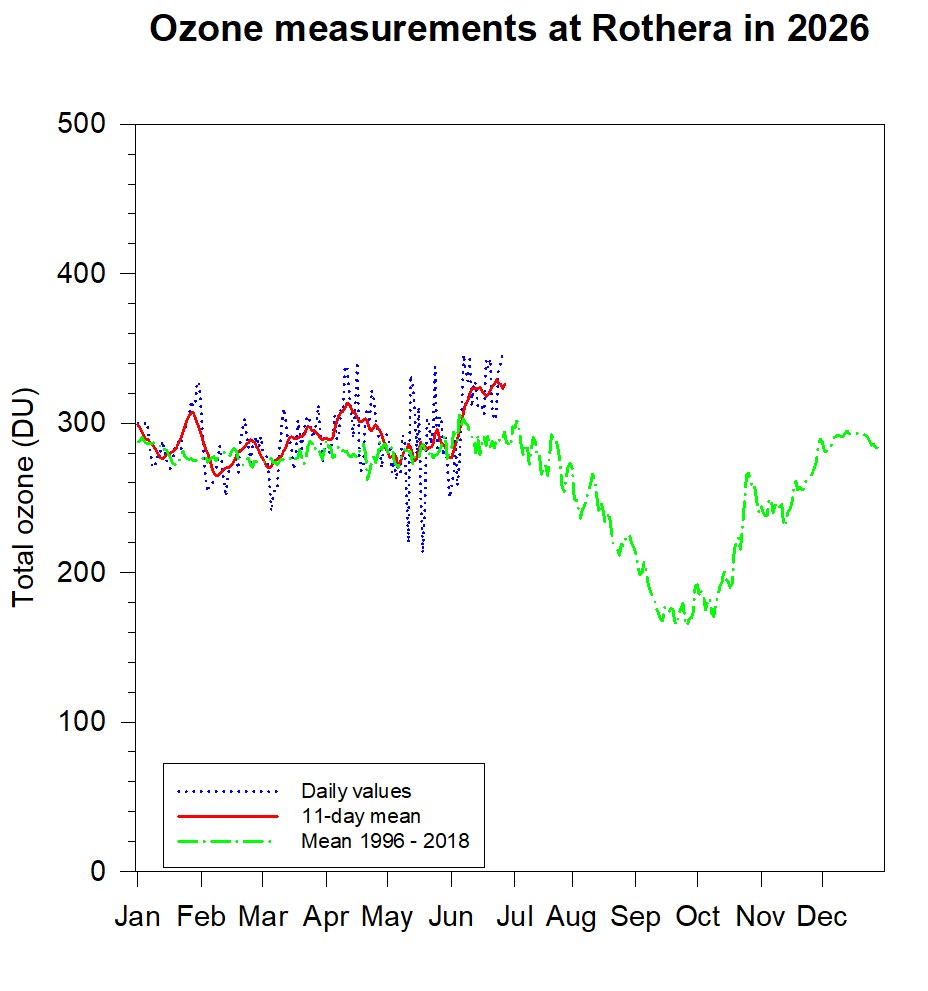 Rothera - Total ozone:
Real-time graphs showing current ozone and NO2 levels.
Mean ozone values had risen from around 310 DU at the solstice to around 330 DU by mid July, with the station remaining just outside the
growing polar vortex.
Ozone values then began to drop and reached around 170 DU in mid September. Values then rose above the ozone hole threshold in early October to a peak of around 300 DU.
They have since fallen back to near ozone hole levels around 230 DU.
The lowest ozone value seen so far this
year is 144 DU on September 26, whilst the highest is 378 DU on June 29.
Rothera - Total ozone:
Real-time graphs showing current ozone and NO2 levels.
Mean ozone values had risen from around 310 DU at the solstice to around 330 DU by mid July, with the station remaining just outside the
growing polar vortex.
Ozone values then began to drop and reached around 170 DU in mid September. Values then rose above the ozone hole threshold in early October to a peak of around 300 DU.
They have since fallen back to near ozone hole levels around 230 DU.
The lowest ozone value seen so far this
year is 144 DU on September 26, whilst the highest is 378 DU on June 29.
Vernadsky - Total ozone: Vernadsky station is run by the National Antarctic Scientific Centre of Ukraine. It is some 250 km north of Rothera. The observing season begins in late July. Superimposed on the general trends during the year are fluctuations with periods of days to around a month and values can change by over 50% in a few days in the spring when the polar vortex rotates across the station, which is usually near the edge region of the polar vortex. Very early and late season observations are made with the Sun at low elevation, and are less accurate than those made during the main observing period of August 6 to May 6. The instrument constants were last revised on 2023 November 14 and previously published values for 2023 have changed by a small amount. A further small revision is likely.
Ozone measurements re-commenced for the season in late July, and values fell from around 290 DU to 200 DU in late September. They rose above ozone hole levels to a peak of around 340 DU, close to average for early October. Values have since fallen and are now around 290 DU. The lowest value seen so far this season is 173 DU on September 26, whilst the highest is 374 DU on October 11.
 Temperature
and PSCs: The 100 hPa pressure level is near the base of the ozone
layer, but is reached by most radiosonde flights. The
temperature at this height is sufficiently cold from July to October that polar
stratospheric clouds (PSCs) can form. Note: "the normal" is used to refer to
the long term mean for the time of year.
Temperature
and PSCs: The 100 hPa pressure level is near the base of the ozone
layer, but is reached by most radiosonde flights. The
temperature at this height is sufficiently cold from July to October that polar
stratospheric clouds (PSCs) can form. Note: "the normal" is used to refer to
the long term mean for the time of year.
Both Halley and Rothera see
displays of nacreous clouds. Those at Halley are of the form described
during the IGY as "ultra-cirrus". Clouds were seen at Rothera during the 2026 season.
Halley - 100 hPa temperature: Radiosonde flights are only
made during the short summer season.
Peninsula - 100 hPa temperature:
The "Peninsula temperature" is usually the mean of five flights per week
from Rothera and one from Marambio and may include other
All the colder winters in the ozone layer
have been within the last 15 years.
Arctic: Temperatures
are above the
Polar Stratospheric Cloud (PSC) formation temperature.
Ozone values are broadly uniform across the Arctic
and range from around 260 DU to around 390 DU. Ozone amounts
over the UK are currently around 290 DU.
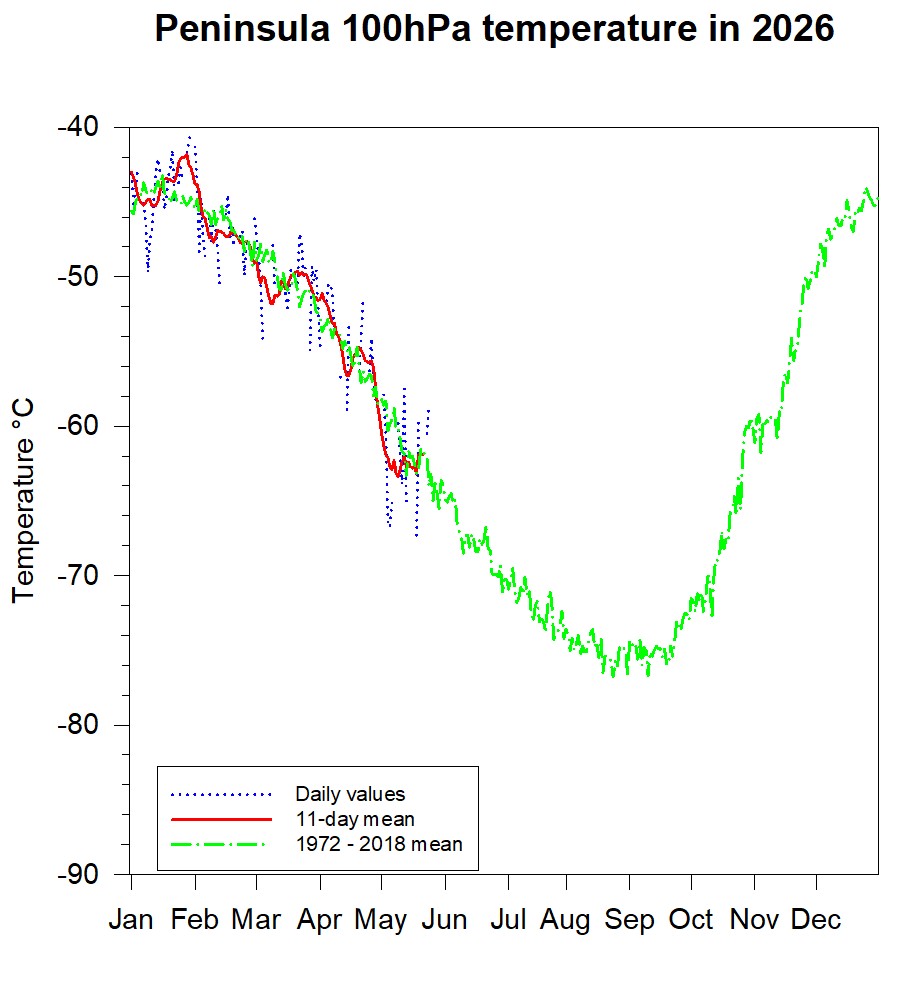 stations when available. Currently flights from Rothera are irregular due to staff shortages and those
from Marambio are not reaching the GTS.
The temperature has
broadly been close to average in 2026. The lower stratosphere cooled and
the 100 hPa temperature had reached -77°C by mid September, close to the annual minimum and cooler than the
long term mean. The polar vortex swung away from the Peninsula and the temperature has risen to around -69°C. There was strong wave activity with a period of about 20
days until the solstice, but this died down, then resumed in late July. There is often large day to day variation during the spring because the area is
in the edge region of the circumpolar vortex.
stations when available. Currently flights from Rothera are irregular due to staff shortages and those
from Marambio are not reaching the GTS.
The temperature has
broadly been close to average in 2026. The lower stratosphere cooled and
the 100 hPa temperature had reached -77°C by mid September, close to the annual minimum and cooler than the
long term mean. The polar vortex swung away from the Peninsula and the temperature has risen to around -69°C. There was strong wave activity with a period of about 20
days until the solstice, but this died down, then resumed in late July. There is often large day to day variation during the spring because the area is
in the edge region of the circumpolar vortex.
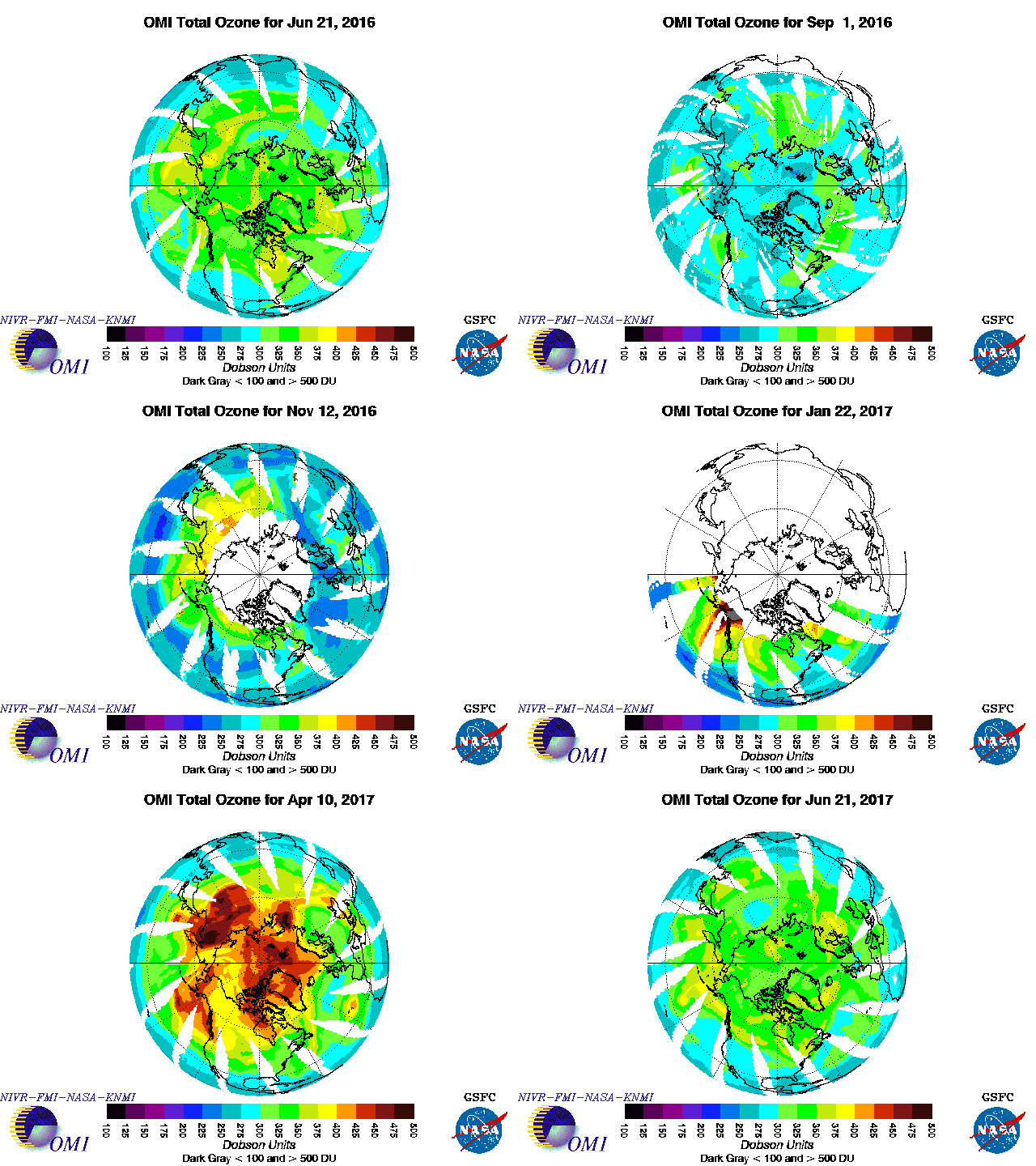
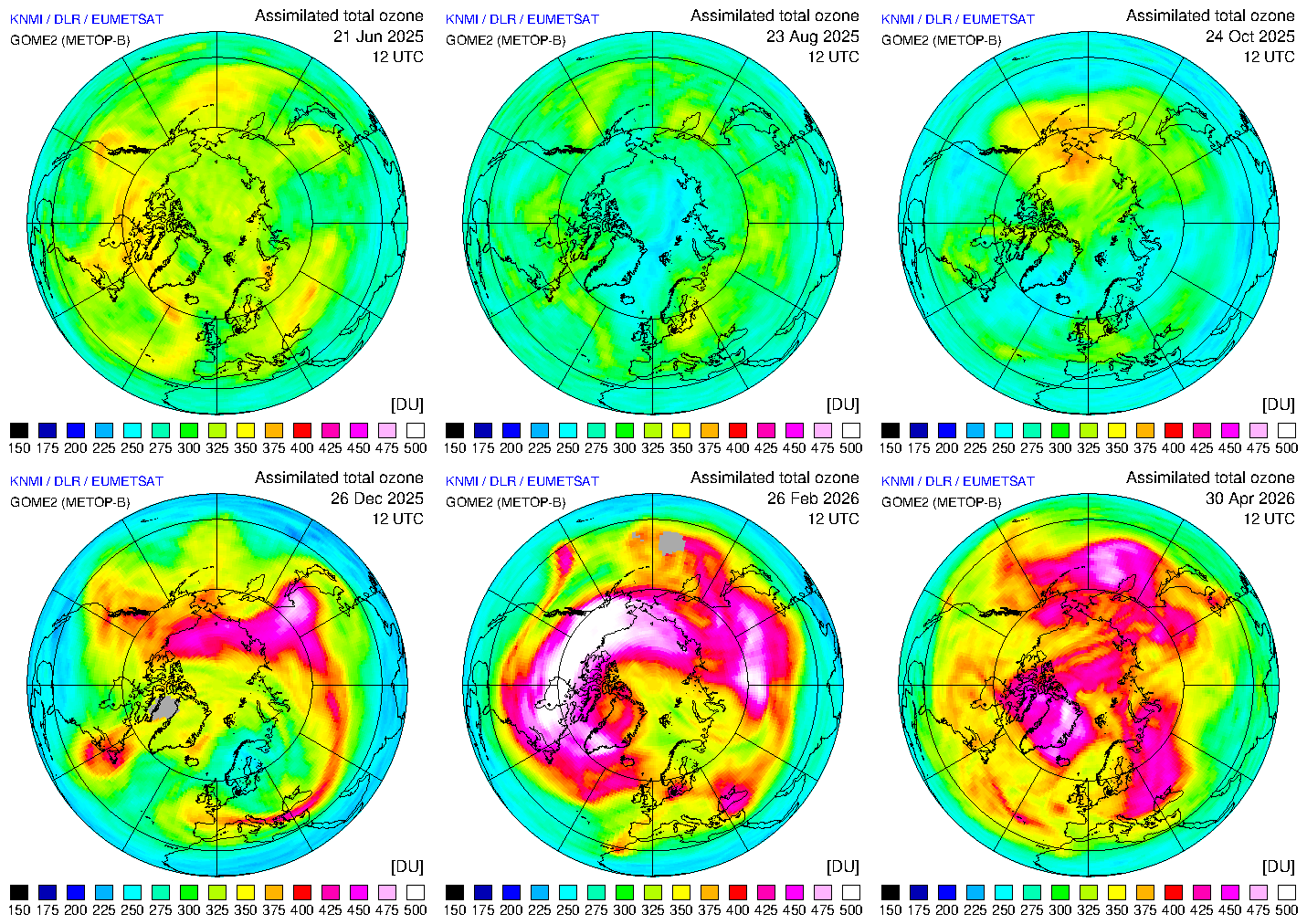
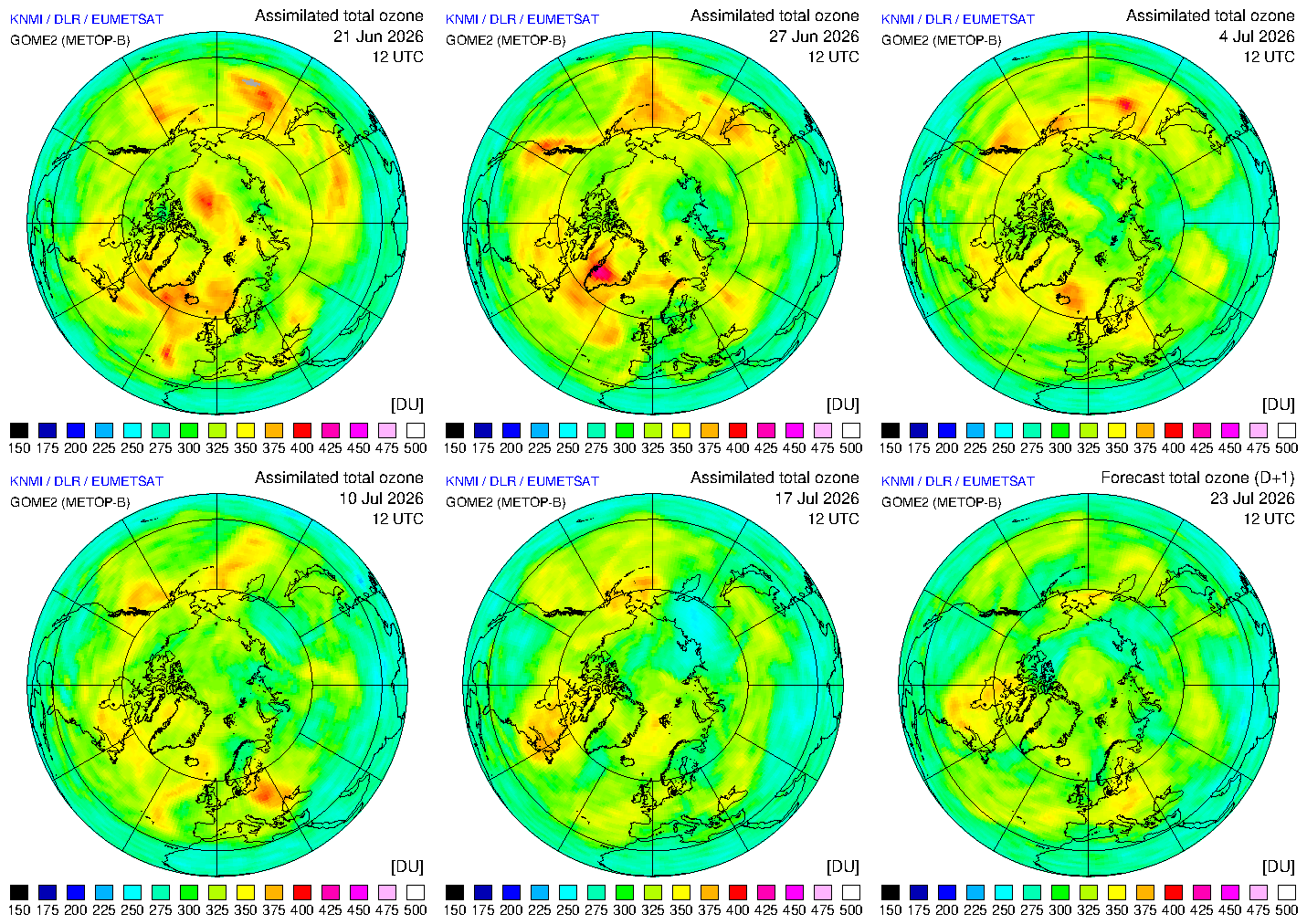
The north polar vortex is usually smaller and more disturbed than the corresponding one that forms during the Antarctic winter.
There are sometimes significant differences (over 100 DU) between modeled, satellite and ground-based measurements, particularly when there is large variation in total column ozone. Ozone values over the Arctic during 2022/23 are shown in our Northern Hemisphere OMI movie. For more UK information see the DEFRA UK Stratospheric Ozone Measurements page.

Equator: Ozone
levels are normally lowest over the tropics and TEMIS plots show nothing unusual.
The latest theories on how the ozone layer will change in response to increased
carbon dioxide in the atmosphere suggest that there will be a slow decline in
ozone amounts over tropical and sub-tropical regions.
These areas may also be affected by the consequences from the increasing number
of satellite launches and re-entries distributing aluminium oxide particles in
the upper atmosphere. Measurements reported here refer to
ozone in the "ozone layer", where most of the ozone in the atmosphere is found.
This "layer" stretches from roughly 10 to 40 km above the Earth's surface, with a
peak at around 20 km. Bringing all the ozone in the "layer" down to ground
level would give a thickness of around 3mm of pure ozone, which reduces to
around 1mm at the height of the ozone hole. A little ozone also exists
closer to the Earth's surface and
research shows that natural halogens in Antarctica can produce
depletion in this near surface layer. The theoretical basis for the
formation of the Antarctic ozone hole and its link with the halogen chemistry of
man-made substances is well established and the mechanism is described at sites
such as the Ozone Hole Tour at the
Cambridge University Centre for Atmospheric Science. The BAS ozone
bulletins contained the actual ozone values reported together with an
analysis of the situation. These were distributed by email on request, but are
now superceded by this web site. The last
email ozone bulletin
was issued on 2002 May 28. The final situation report
of each season is archived for historical reference. Please read this metadata
description before asking any questions about the data.
[updated 2025 February 4]. Older data (1972 - 2011) has been
recomputed and all the preliminary values are posted. Some of the
zenith sky regressions do not give a good fit and will be improved. The
direct sun measurements during this period are unlikely to change. Provisional Dobson daily
mean ozone values for 2026/2027 for Halley
[None yet, see below for SAOZ] and Vernadsky. [Updated 2026 October 19].
Note : The calibration of the current instruments is not yet
fully determined as the instruments use ongoing solar measurements for in-situ
calibration. The manual Dobson at Halley was changed in 2012 February and
required maintenance in 2013 August. The zenith sky tables or other
calibration values were last revised on 2018 February 4, but the daily means may
still have errors up to 5%, particularly when ozone values or the solar
elevation are low. Halley has become a summer only station and there are no manual observations
between 2017 February 15 and 2017 December 7,
2018 February 26 and 2018 December 10, 2019 February 16 and 2021 January 10 and
since 2021 February 10. The instrument calibration constants
are being
revised, so values given here may change. The automated Dobson is likely
to have larger errors as it has not been callibrated under low ozone conditions.
The instrument constants for Dobson 123 at Vernadsky were revised in 2019
October and may require further revision. The preliminary Halley and Vernadsky
values should therefore be treated with some caution. Temperature
and Ozone graphs for Halley and Vernadsky/Faraday. [Updated 2021 December 14].
The historic period shown in the inline graphs is for 1957 - 1972. Rothera
King Edward Point, South Georgia Cambridge Some background information on
Halley,
Rothera
and
Faraday
stations is available from BAS. Information about Vernadsky station is also
available from the Ukrainian Antarctic Centre. Information about Vladimir
Ivanovich Vernadsky Some surface and upper air synoptic
data is also available on line from our
public data page. Southern Hemisphere ozone
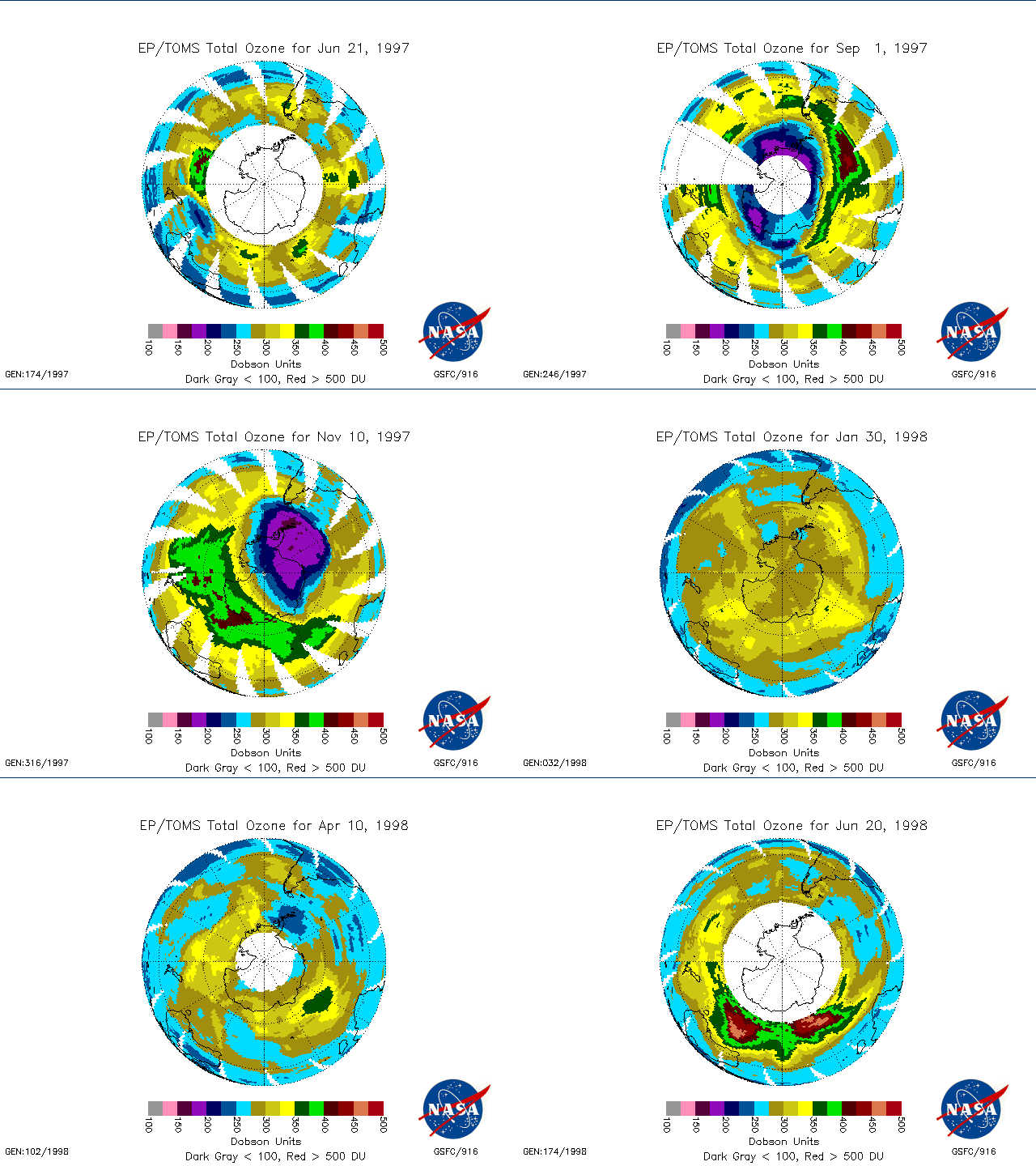
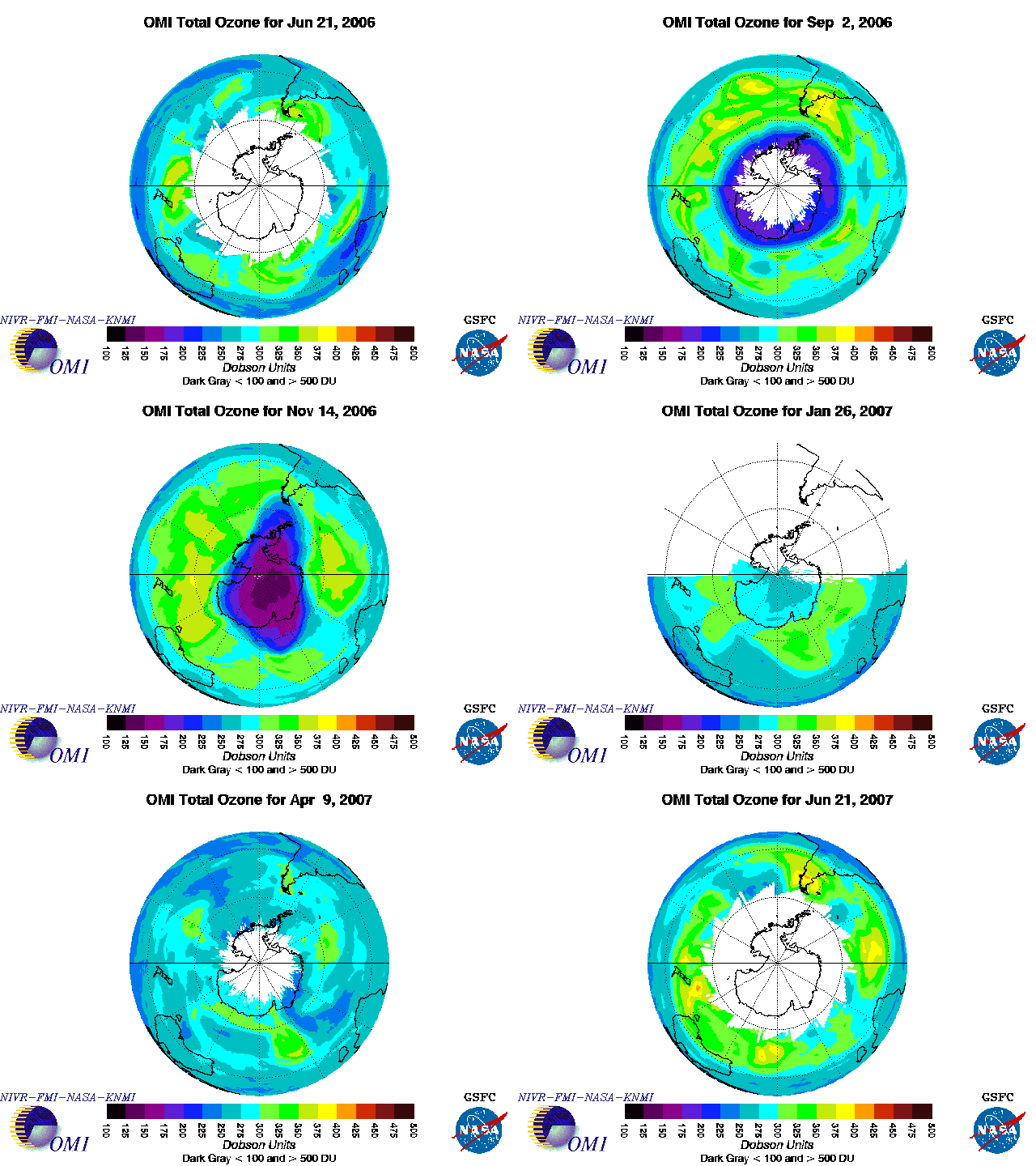
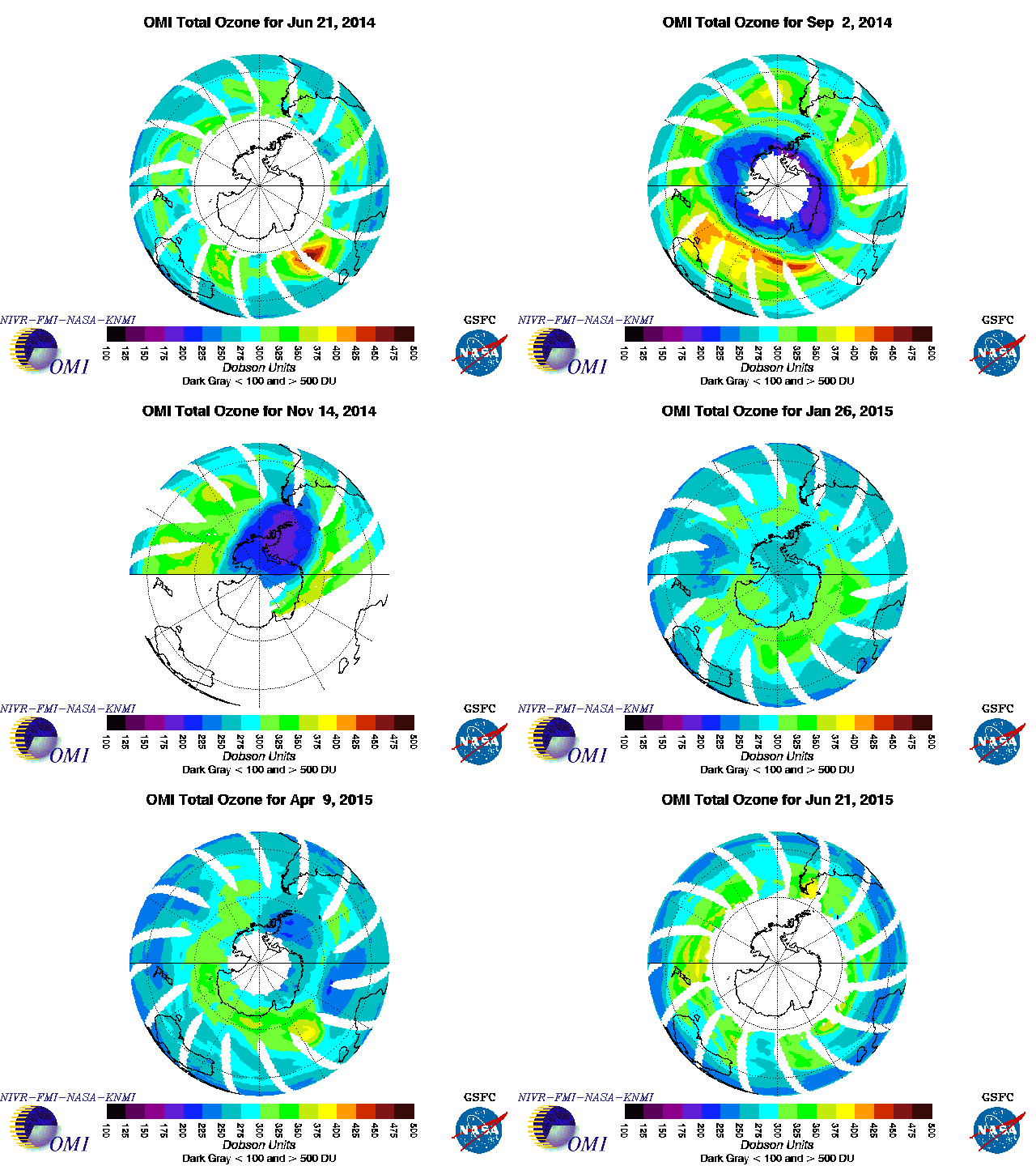
hole movies for 1997/1998 , 1998/1999
, 1999/2000 , 2000/2001
, 2001/2002 , 2002/2003
, 2003/2004 , 2004/2005
, 2005 [TOMS], 2005/2006
, 2006/2007 , 2007/2008
, 2008/2009 , 2009/2010
, 2010/2011 , 2011/2012
, 2012/2013 , 2013/2014
, 2014/2015 , 2015/2016
, 2016/2017 , 2017/2018
, 2018/2019 , 2019/2020
[OMI], 2020/2021 , 2021/2022 [OMPS],
2022/2023 , 2023/2024 ,
2024/2025 [OMI] , 2025/2026 ,
2026/2027
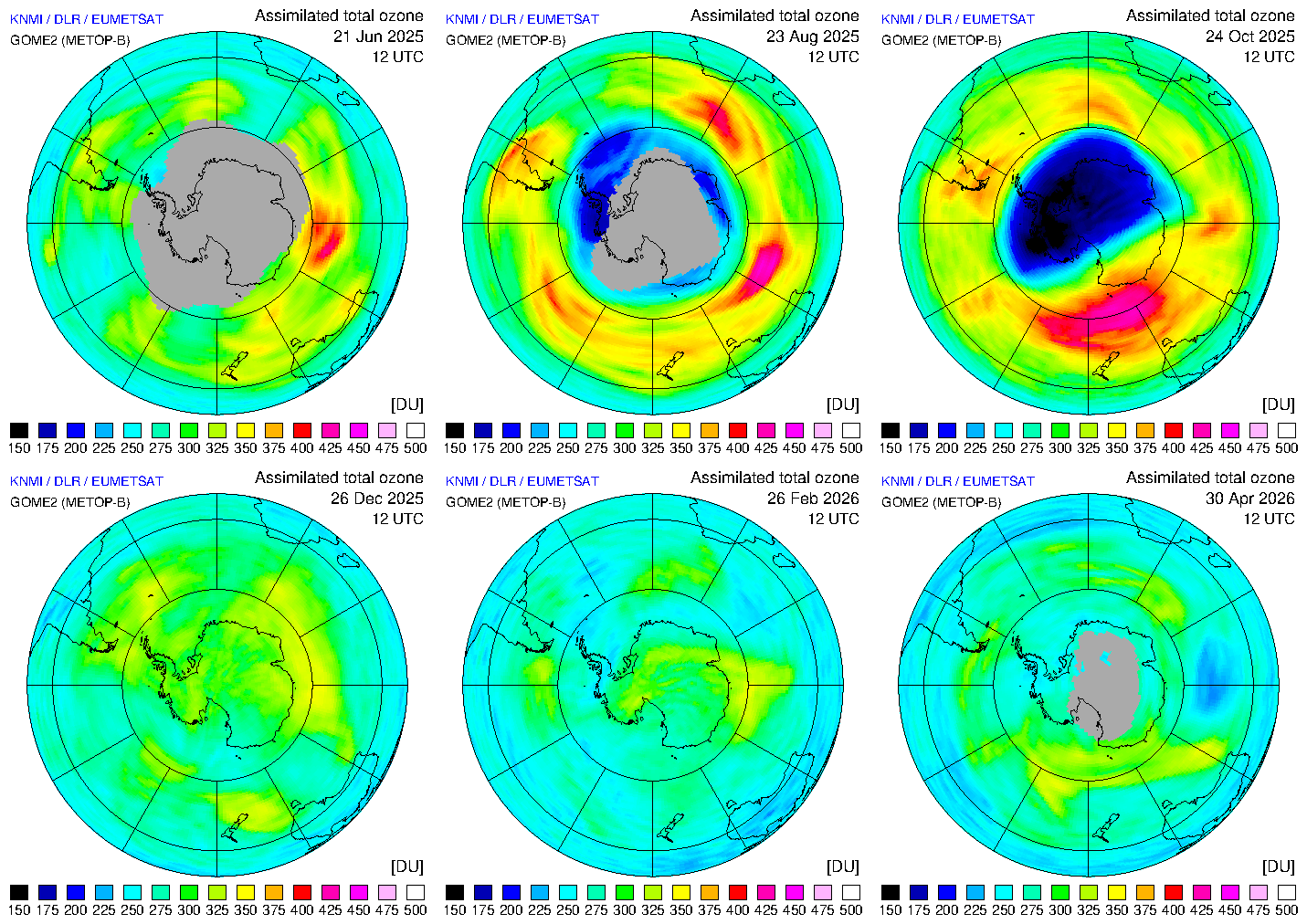
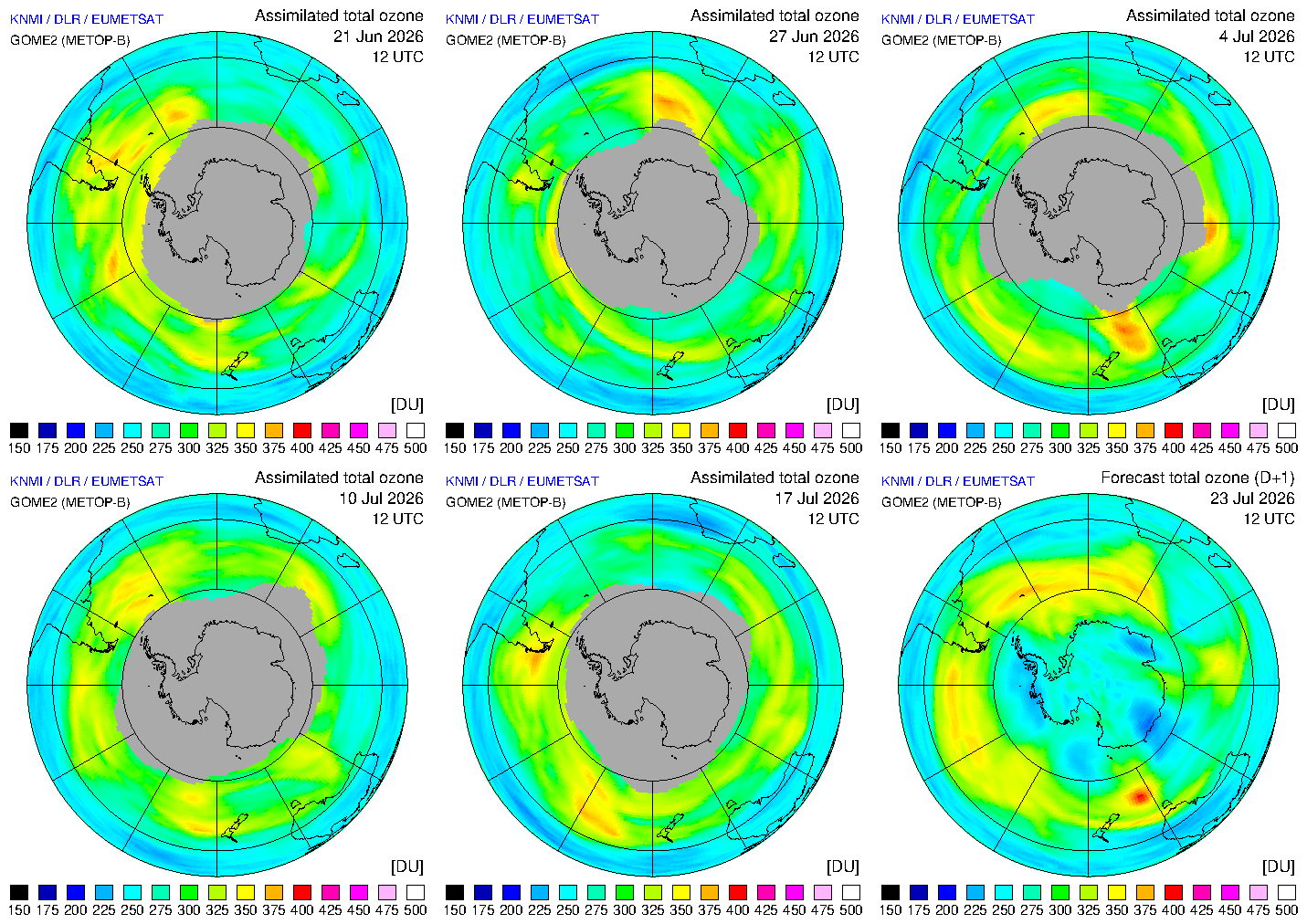
[GOME 2, updated to 2026 September 30]. A short sequence of the
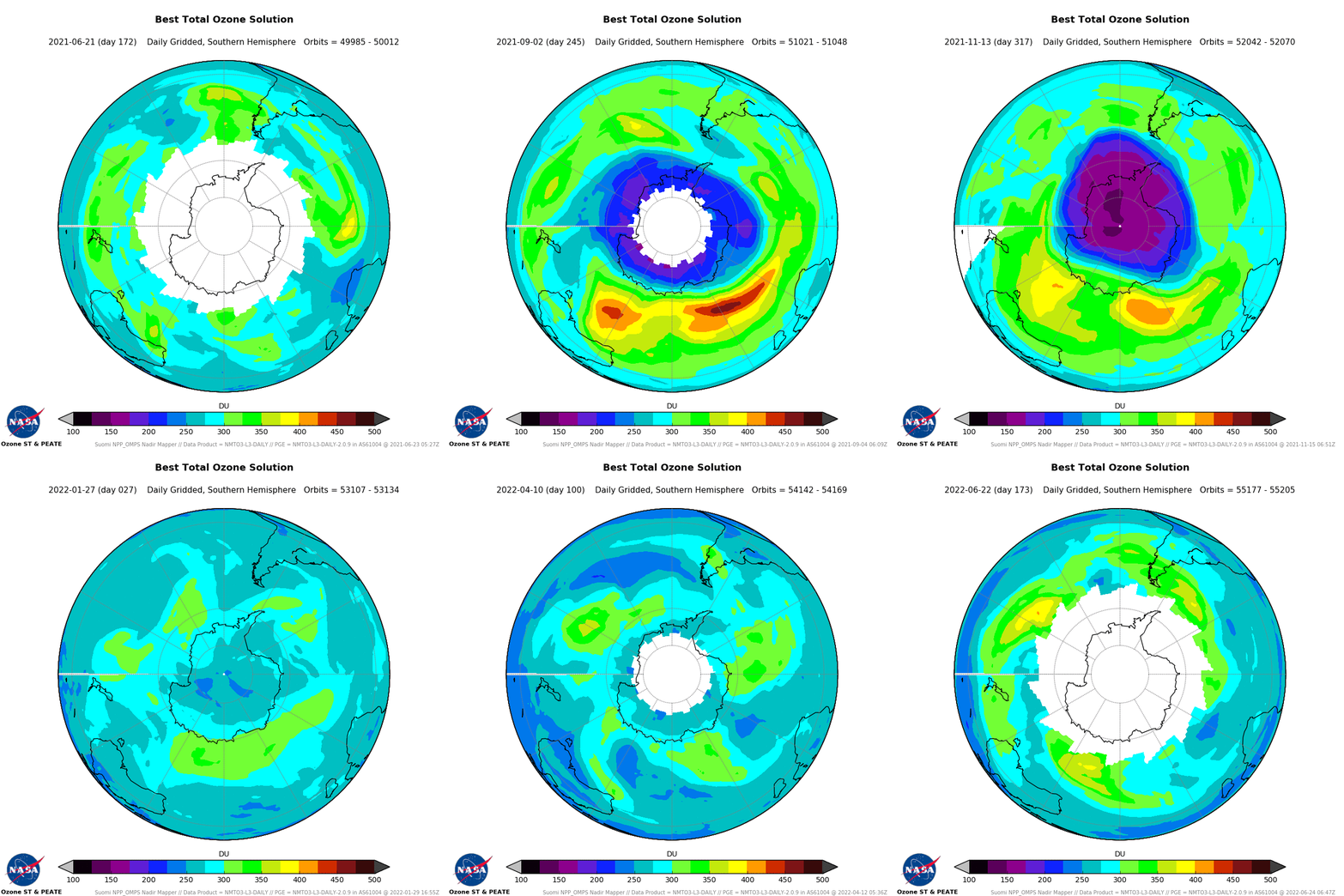
2001 ozone hole. A composite sequence of the 2022 and 2021 ozone holes
running from 2022 June 21 to 2022 September 13 and 2021 September 14 to 2021
December 31.
Satellite:
Satellite imagery
gives a global perspective on the ozone hole, though there
are marked differences between the different satellites, demonstrating the need
for verification by ground based stations. Our
2022/2023 Antarctic ozone hole movie was produced
from OMI images, which are generally well calibrated with respect to ground
based measurements. KNMI analyses are shown on the
Canadian Met Service world ozone maps pages. The KNMI model is
generally better at analysis and forecasting in the Antarctic. The Canadian
composite plot appears to give undue weight to the SMOBA observations.
The SMOBA and TOAST analyses both use SBUV and TOVS data, but
the TOAST algorithm may at times over-estimate ozone depletion.
In 2022/23 the SMOBA analysis did not pick up ozone depletion over Antarctica and gave unreasonably high values over the Arctic.
It was possibly being affected by smoke from forest fires. US NWS
CPC plots from NOAA show the
current area of the ozone hole, though note that this is often a preliminary
plot. The Sciamachy
uv index from the ESA Tropospheric Emission Monitoring Internet
Service shows the exposure risk at any location. TEMIS also provide
forecasts of total ozone out to 9 days.
Background and related material
 Hannah
Fry explained about fridges in a programme broadcast on BBC2 on 2025 April 9
Hannah
Fry explained about fridges in a programme broadcast on BBC2 on 2025 April 9
Ozone bulletins
Ozone data
Two documents describe our standard operating procedures:
The BAS Dobson Manual
and the BAS ozone station
instructions. A paper describing the stations, observing programs and
reduction procedures is in preparation. Most of our data is available on line,
however please note that this is provisional and likely to change without
warning. You must request permission to reproduce the data and we may be
able to supply more suitable or more up to date material. If data from
Halley is used you must give the station name as Halley; Halley Bay was a
geographical feature that no longer exists.
Halley
Provisional daily mean ozone values for Halley in
2011/12 , 2012/13
,
2013/14 , 2014/15
,
2015/16 , 2016/17
, 2017/18 , 2018/19
, 2019/20 , 2020/21
, 2021/22 , 2022/23
, 2023/24 , 2024/25
, 2025/26 using Dobson 31 in manual operation.
Provisional daily mean ozone values for Halley in
2005/06 , 2006/07
,
2007/08 , 2008/09
,
2009/10 , 2010/11
,
2011/12 using Dobson 73 in manual mode. 2017/18
, 2018/19 , 2019/20
, 2020/21 , 2021/22
, 2022/23 , 2023/24
, 2025/26 using Dobson 73 in auto mode.
Provisional daily mean ozone values for Halley in
1991/92 , 1992/93
,
1993/94 , 1994/95
,
1995/96 , 1996/97
,
1997/98 , 1998/99
,
1999/00 , 2000/01
,
2001/02 , 2002/03
,
2003/04 , 2004/05
,
2005/06
using Dobson 103.
Provisional daily mean ozone values for Halley in
1981/82 , 1982/83
,
1983/84 , 1984/85
,
1985/86 , 1986/87
,
1987/88 , 1988/89
,
1989/90 , 1990/91
,
1991/92
using Dobson 123.
Provisional daily mean ozone values for Halley in
1972/73 ,
1973/74 , 1974/75
,
1975/76 , 1976/77
,
1977/78 , 1978/79
,
1979/80 , 1980/81
,
1981/82
using Dobson 31.
Provisional individual ozone values for Halley
in
2011/12 , 2012/13
,
2013/14 , 2014/15
, 2015/16 ,
2016/17 , 2017/18 ,
2018/19 , 2019/20 ,
2020/21 , 2021/22 ,
2022/23 , 2023/24 ,
2024/25 , 2025/26 using Dobson 31 in manual operation.
Provisional individual ozone values for Halley in
2005/06 , 2006/07
,
2007/08 , 2008/09
,
2009/10 , 2010/11
,
2011/12 with Dobson 73 in manual mode, 2017/18
, 2018/19 , 2019/20
, 2020/21 , 2021/22
, 2022/23 , 2023/24
, 2025/26 using Dobson 73 in auto mode.
Provisional individual ozone values for Halley in
1991/92 , 1992/93
,
1993/94 , 1994/95
,
1995/96 , 1996/97
,
1997/98 , 1998/99
,
1999/00 , 2000/01
,
2001/02 , 2002/03
,
2003/04 , 2004/05
,
2005/06
using Dobson 103.
Provisional individual ozone values for Halley in
1981/82 , 1982/83
,
1983/84 , 1984/85
,
1985/86 , 1986/87
,
1987/88 , 1988/89
,
1989/90 , 1990/91
,
1991/92
using Dobson 123.
Provisional individual ozone values for Halley in
1972/73 ,
1973/74 , 1974/75
,
1975/76 , 1976/77
,
1977/78 , 1978/79
,
1979/80 , 1980/81
,
1981/82
using Dobson 31.
Faraday/Vernadsky
Provisional daily mean
ozone values for Vernadsky in
2004/05 , 2005/06
, 2006/07 ,
2007/08 , 2008/09
, 2009/10 ,
2010/11 , 2011/12
, 2012/13 ,
2013/14 , 2014/15
, 2015/16 ,
2016/17 , 2017/18 ,
2018/19 , 2019/20 ,
2020/21 , 2021/22 ,
2022/23 , 2023/24 ,
2024/25 , 2025/26 ,
2026/27 using Dobson 123.
Provisional daily mean ozone values for Vernadsky in
1983/84 , 1984/85
, 1985/86 ,
1986/87 , 1987/88
, 1988/89 ,
1989/90 , 1990/91
, 1991/92 ,
1992/93 , 1993/94
, 1994/95 ,
1995/96 , 1996/97
, 1997/98 ,
1998/99 , 1999/00
, 2000/01 ,
2001/02 , 2002/03
, 2003/04 ,
2004/05 using Dobson 31.
Provisional daily mean ozone values for Vernadsky in
1971/72 ,
1972/73 , 1973/74
, 1974/75 ,
1975/76 , 1976/77
, 1977/78 ,
1978/79 , 1979/80
, 1980/81 ,
1981/82 , 1982/83
, 1983/84 ,
1984/85 using Dobson 73.
Provisional individual ozone values for Vernadsky in
2004/05 , 2005/06
, 2006/07 ,
2007/08 , 2008/09
, 2009/10 ,
2010/11 , 2011/12
, 2012/13 ,
2013/14 , 2014/15
, 2015/16 ,
2016/17 , 2017/18 ,
2018/19 , 2019/20 ,
2020/21 , 2021/22 ,
2022/23 , 2023/24 ,
2024/25 , 2025/26 ,
2026/27 using Dobson 123.
Provisional individual ozone values for Vernadsky in
1983/84 , 1984/85
, 1985/86 ,
1986/87 , 1987/88
, 1988/89 ,
1989/90 , 1990/91
, 1991/92 ,
1992/93 , 1993/94
, 1994/95 ,
1995/96 , 1996/97
, 1997/98 ,
1998/99 , 1999/00
, 2000/01 ,
2001/02 , 2002/03
, 2003/04 ,
2004/05 using Dobson 31.
Provisional individual ozone values for Vernadsky in
1971/72 ,
1972/73 , 1973/74
, 1974/75 ,
1975/76 , 1976/77
, 1977/78 ,
1978/79 , 1979/80
, 1980/81 ,
1981/82 , 1982/83
, 1983/84 ,
1984/85 using Dobson 73.
Provisional Dobson monthly mean ozone values for Faraday/Vernadsky between 1957 and 2025
January
and Halley between 1956 and 2026 February, augmented
with satellite data.
Monthly mean satellite ozone values for Halley from 2004 October to 2026
February.
Note the satellite season lasts longer into April and starts earlier in August
than do Dobson measurements. Overall there is good agreement between the
two datasets, so the satellite data may be used to fill Dobson data gaps.
Provisional monthly minimum ozone values for Faraday/Vernadsky between 1972 and 2025 January and Halley between 1956 and 2026 February, augmented
with satellite estimates.
Mean daily ozone values for the period 1957 - 1972 for
Faraday and Halley. [NB: not corrected to Bass-Paur]
Daily ozone values for the period 1957 - 1973 for Faraday and Halley. [Revised to Bass-Paur]
Provisional Halley SAOZ total column nitrogen dioxide
and ozone:
2013 [processing revised 2013 November 22] , 2014 ,
2015 , 2016 , 2021 ,
2022 , 2023 , 2024 ,
2025 , 2026
[updated 2026 October 19] and as
real-time graphs showing current ozone and NO2 levels.
The SAOZ did not run from when the station closed before the 2018 winter until
the 2021/22 summer. There was no power during the 2022 and 2024 winters.
The instrument stopped before the start of the 2025 winter. It was unresponsive
for a short time in the autumn of 2026.
Ozone & nitrogen dioxide:
SAOZ total column nitrogen dioxide and ozone:
1996 ,
1997 , 1998 ,
1999 ,
2000 , 2001 ,
2002 ,
2003 , 2004 ,
2005 ,
2006 , 2007 and
2008
[to 2008 January 22].
"New" SAOZ total column nitrogen dioxide and ozone:
2006 , 2007 ,
2008 ,
2009 , 2010 ,
2011 ,
2012 , 2013 ,
2014 ,
2015 , 2016 , 2017 ,
2018 , 2019 , 2020 ,
2021 , 2022 , 2023 ,
2024 , 2025 , 2026 [updated 2026
October 19]
and as
real-time graphs showing current ozone and NO2 levels. Data is missing
between 2013 December 23 and 2014 January 6. Data from 2017 January 6 to
May 8 is
likely to be revised as there were some issues with the instrument. Some
data in 2017 October and November, which show high standard deviation is also
suspect, though in some cases this simply reflects large changes in ozone column
during the day. There are some shorter periods with missing data due to
computer glitches. These became more problematic in 2019 and no data was collected
between 2019 January 18 and March 4.
Provisional monthly mean ozone values
from 1996 to 2025 January.
Note that means for some months are based on partial data.
Ozonesondes:
During 2003 we carried out ozone sonde flights at Rothera as part of the
QUOBI project. Data from these
flights
is available in NASA-AMES format. Animation
of the ozonesonde flight results [note that although the ozone scale on these
graphs reads nanobars, it should read mPa].
Bentham ozone. Provisional values for 1997
/ 1998 / 1999 /
2000
/ 2001 / 2003 /
2004 [updated 2004 November 5]. The
Bentham instrument ran until 2012, but data from it has not been used to produce
further ozone values.
Provisional daily mean ozone values in
1971 , 1972 , 1973 ,
1974 , 1975 , 1976 ,
1977 , 1978 , 1979 ,
1980 , 1981 , 1982
Provisional individual ozone values in
1971 , 1972 , 1973 ,
1974 , 1975 , 1976 ,
1977 , 1978 , 1979 ,
1980 , 1981 , 1982
Some
experimental data from an automated Dobson making zenith only observations is available, but this is not well
calibrated, particularly when ozone amounts are above
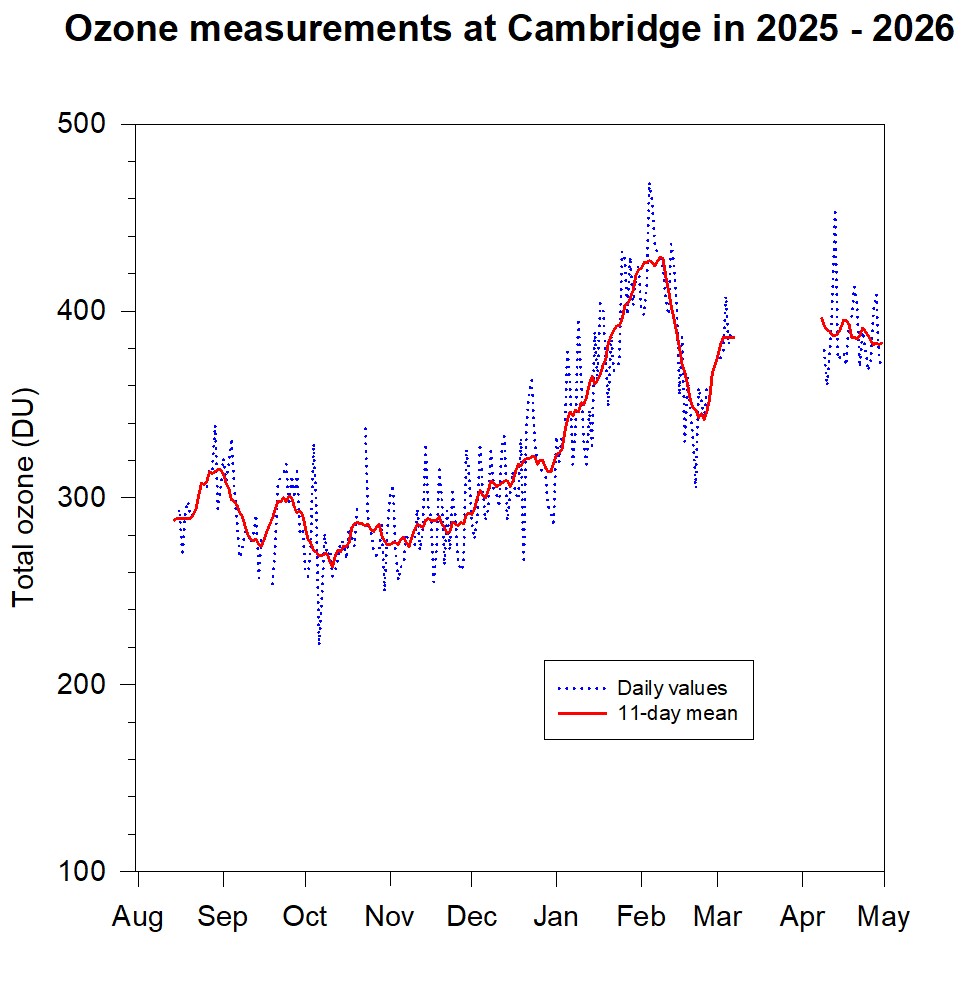 350 DU and when the sun is
low in the sky. Some
preliminary data is now available, though there are some technical issues with
the instrument leading to data gaps. The instrument resumed operation in
2023 September after it underwent callibration at Hohenpeissenberg in
2023 July. The instrument constants have been adjusted and the zenith equations
were revised in 2024 June, but there is still some uncertainty in the zenith sky
equations. The electronics failed at the beginning of 2024 October, but have
been repaired. The instrument is being configured for
automated direct sun observations and may switch to this mode from time to time and are likely to be intermittent.
Trials of direct sun mode started on April 30 and this mode is now in routine operation. Measurements suggest
the need for a small change in the callibration constants.
The motor failed on July 6, but was replaced and the instrument adjusted. Operation restarted on July 15.
350 DU and when the sun is
low in the sky. Some
preliminary data is now available, though there are some technical issues with
the instrument leading to data gaps. The instrument resumed operation in
2023 September after it underwent callibration at Hohenpeissenberg in
2023 July. The instrument constants have been adjusted and the zenith equations
were revised in 2024 June, but there is still some uncertainty in the zenith sky
equations. The electronics failed at the beginning of 2024 October, but have
been repaired. The instrument is being configured for
automated direct sun observations and may switch to this mode from time to time and are likely to be intermittent.
Trials of direct sun mode started on April 30 and this mode is now in routine operation. Measurements suggest
the need for a small change in the callibration constants.
The motor failed on July 6, but was replaced and the instrument adjusted. Operation restarted on July 15.
Provisional daily mean zenith ozone values for Cambridge in
2018/19 , 2019/20 ,
2021/22 , 2022/23 ,
2023/24 , 2024/25 ,
2025/26 , 2026/27 [updated 2026 October 19] using Dobson 103 in automode.
Values are currently being over-estimated, by around 10%.
Provisional individual ozone values for Cambridge in 2018/19 , 2019/20 ,
2021/22 , 2022/23 ,
2023/24 , 2024/25 ,
2025/26 , 2026/27 using Dobson 103 in automode.
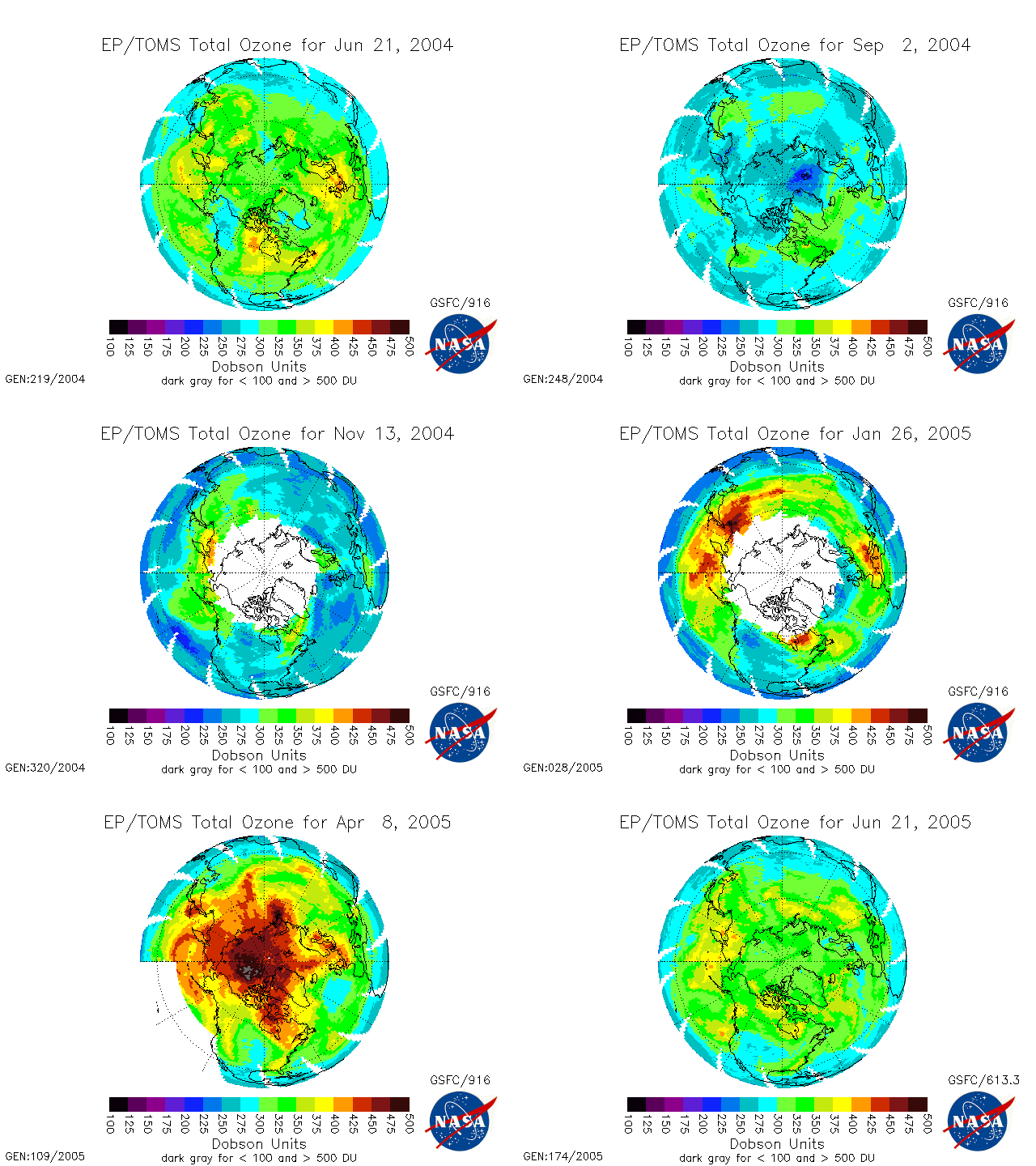
Northern Hemisphere movies for 2000/2001 , 2001/2002
, 2002/2003 ,
2003/2004
, 2004/2005 , 2005
[TOMS], 2005/2006 ,
2006/2007
, 2007/2008 , 2008/2009
, 2009/2010 , 2010/2011
, 2011/2012 , 2012/2013
, 2013/2014 , 2014/2015
, 2015/2016 , 2016/2017
, 2017/2018 , 2018/2019
, 2019/2020 [OMI], 2020/2021
, 2021/2022 [OMPS], 2022/2023
, 2023/2024 , 2024/2025 [OMI]
, 2025/2026 , 2026/2027
[GOME 2, updated to 2026 September 30]. A short sequence of ozone depletion during the
2002/03 northern winter showing the difference from the normal.
The annual ozone movies were about 7Mb and were compiled from daily TOMS images until the end of 2005; from
2005/06 until 2019/20 and again from 2022/23 they were compiled from OMI images.
For 2020/21 and 2021/22 they used OMPS images
and the annual file size was over 16Mb.
The movies begin and end on the June solstice. Due to cutbacks at NOAA images
from 2026 were not being stored in an accessible directory, so the movies have
switched to using GOME 2 from Temis.
Today's forecast Gome 2b Antarctic image
The
current area of the hole and
other latest details are available from the NOAA Climate Prediction Center.
Environment Canada have a set of
daily maps showing both northern and southern ozone levels from a variety of
sources.
The Sciamachy uv index
from the ESA Tropospheric Emission Monitoring Internet Service.
Note that west longitude is negative when entering co-ordinates.